

21 December 2010

mala xiangguo (麻辣香锅)

This is a new dish I discovered on my last trip to China; and I’m hoping someone just recently invented this, because I don’t know how I could not have tried it before! After seeing people line up for this dish at different food courts, we finally tried it at a sit-down place called… yep, the name of the dish. (ma la xiang guo = “numbing spicy fragrant pot”)

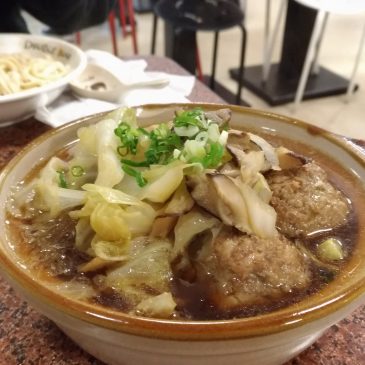
Unfortunately this is a post-eating shot, but you can see it’s for spice lovers. You could say it’s kinda like a dry version of hotpot… Basically there’s a counter with raw ingredients (similar to what you would find for hotpot), and your server fills a gigantic metal bowl with whatever you tell him. Then after choosing either regular or really spicy, the cook does some sort of magic cookery while you wait for its final delivery to your table. YUM! and NUMB!

I believe you pay by weight at food courts, but at this particular restaurant it was a set price. which apparently also included ice cream to cool you down after (or maybe even during?) your meal–like this guy here, who we watched alternate bites between the bowl and his two cones:

2 December 2010

a day at the beach... in Dalian

Since it’s December and minus 15°C out, I thought I’d write about the beach. Or at least about the last time I’d been to a beach, which was in Dalian on China’s Northeast coast.

Dalian was rated China’s most livable city in 2006–a fact that kept popping up everywhere we went (or maybe we were just watching too many CCTV commercials at the hotel). Dalian also happened to be the site of a massive pipeline oil spill in July, equivalent in size to the Exxon Valdez accident (though I suppose this is minuscule when compared to what was happening in the Gulf of Mexico at the time).

Anyway, we were curious to check out the beaches since we were there barely 3 weeks after the oil spill.

business as usual

As far as Chinese beaches go, things appeared to be normal for August: i.e., insanely crowded + blazingly hot. We opted to stay away from the crowds and crossed over to a rocky area by the water. No oil residue in sight!

…and only one wedding photo shoot.

[the job of the woman behind the bride was to throw the train of the dress high into the air--imitating a gigantic gust of sea wind, I guess?]

The heat was too much, so it wasn’t long before we grabbed a taxi back to the hotel… and after some rest and A/C, we headed to a sichuanese restaurant and had some of my favourite dishes for dinner: shui-zhu-yu (fish), pickled cucumbers, and yu-xiang-qiezi (eggplant). woot!

1 December 2010

look what I found at the grocery store

"whale beef"

…because Norway is one of the few countries (along with Japan and Iceland) that still practise commercial whaling.

4 October 2010

high prices = more pak khom

Oslo is known to be one of the most expensive cities in the world (but was recently surpassed by Copenhagen according to ECA International–a link that was sent to me by a friend in Geneva, btw). There are many reasons for this (which I still need to figure out), but for one thing the wages in Norway are much more equalized: the difference in salaries between the rich and poor is not so drastic as in, say, the United States. You can actually make a decent wage at a menial job here–but as a result, we pay more for services that would normally be cheap in other countries. For example, I paid 75 kroner (around $12) to copy my house key the other day. And haircuts here start at 500-600.

Which is a really roundabout way to say that I don’t often eat out (“You want me to pay *how* much for that?!”), and through a friend have discovered the different Asian grocery stores in the immigrant neighbourhood of Grønland. The shops I go to now are usually run by Vietnamese, but they sell products from a range of Asian and even African countries (I didn’t know they ate so much basmati rice!). Anyway, the main reason I go to these shops is because regular Norwegian supermarkets lack a lot of leafy greens and their fresh vegetables usually don’t look, well, fresh.

The Grønland stores are relatively small when compared to big Asian supermarkets in Canada, so it’s amazing how many different kinds of vegetables they manage to import. Yesterday I decided to try one I had completely no idea about: it’s called pak khom, and it is a leafy stem with beautiful purple centres, from Thailand.

After a bit of googling, I found out I could cook it like spinach. So I used our standby morning glory recipe: first stir-fry the stems, then the leaves, and then add a sauce made of chopped garlic, sliced thai chili, black bean sauce, soy sauce, oyster sauce, and sugar.

Turned out great, but the stems are rather chewy so will leave that out next time.

Finally, the last thing I ate yesterday was an apricot-kiwi crumble–I’m always amazed at what a brilliant way this is for getting rid of fruit (I always buy too much). Those are frozen blackberries, btw.

15 September 2010

liang pi (凉皮)

Liang pi literally means ‘cold skin’ in Chinese, and is a lovely cold snack served in the summer. This dish comes originally from Shaanxi province but you can pretty much find it everywhere in northern China, and in Beijing it is common to find liang pi stands on the street, like so:

good advertising

It’s basically a cold noodle dish, but the noodles are cut from a large sheet or ‘skin’ (hence the name). According to Cultural China’s website:

First, wheat or rice flour is turned into a soft dough by adding water and a little bit of salt. Then, the dough is put in a bowl, water is added and the dough has to be ‘rinsed’ until the water is saturated with starch from the dough, turning into a muddy white color. The remainder of the dough is now removed and the bowl is left to rest overnight at a cool place to allow the dissolved starch to precipitate. The following day, there will be a kind of starch-paste on the bottom of the bowl with a more or less clear liquid on top which has to be discarded. Once the liquid has been removed, a small amount the paste can then be poured into a flat plate or tray, and spread evenly in a thin layer. The whole plate is placed into a large pot full of boiling water, where it is steamed for a couple of minutes and the resulting ‘pancake’ cut into long pieces vaguely resembling noodles.

Ok, starch paste doesn’t sound so appetizing, but it’s the sauce that makes this dish! Variations abound, but the main ingredients include garlic, vinegar, chili oil and sesame sauce. As Julia Moskin of the nytimes describes it, the sauce “hits every possible flavor category (sweet, tangy, savory, herbal, nutty and dozens of others).” (Coincidentally, she is describing my fav place to eat in NY, Xi’an Famous Foods–whose version of liang pi actually inspired us to go to Xian this summer! Yes, it’s that good.)

liang pi sauces at an indoor food court

Finally, the noodles and sauce are tossed together with chunks of wheat gluten, cucumber slivers, sometimes beansprouts… a savoury yet refreshing dish when you’re sweltering from the summer heat. Prices range from 3-10 yuan in Beijing, with the more expensive ones coming from fancy shopping mall food courts (gotta pay for the aircon, I suppose).